As prices soar, Iranian diets shrink to survival level
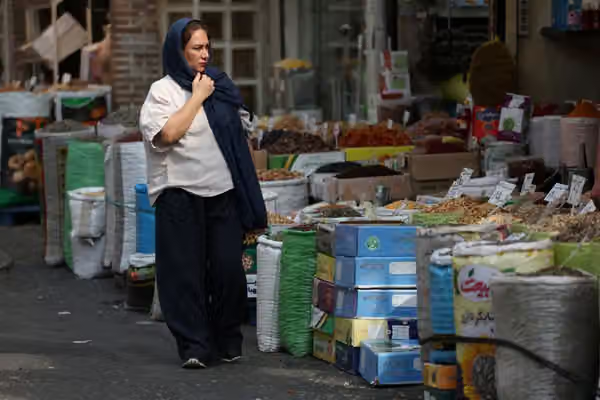
Citizens across Iran say soaring food prices have reduced household diets to the bare minimum needed to stave off hunger, with nutrition and variety increasingly out of reach.

Citizens across Iran say soaring food prices have reduced household diets to the bare minimum needed to stave off hunger, with nutrition and variety increasingly out of reach.

Tourism businesses report empty rooms, mounting losses and growing pressure to cut jobs as rising living costs push travel out of reach for many households.
Simple pleasures, personal goals and everyday purchases have become out of reach for many Iranian teenagers, who told Iran International that economic hardship is reshaping their lives and dimming their hopes for the future.
The Trump administration's sanctions on Iran's largest cryptocurrency exchange mark an escalation in Washington's effort to disrupt the financial infrastructure Tehran uses to operate outside the formal banking system.

Tehran media are publishing increasingly stark assessments of the country's social and economic trajectory, warning that years of sanctions, economic mismanagement and external shocks are eroding both the working class and the middle class.

Iran's imports of services surged to a record $25.5 billion in 2025 while merchandise imports fell sharply, according to newly released data from the Central Bank of Iran, highlighting a significant shift in the country's trade structure.

As US economic pressure, staggering inflation and negative growth converge, economists warn that Iran faces an increasingly bleak outlook that could push millions more people below the poverty line.

Surging inflation and worsening economic hardship in Iran have sharply increased the cost of hygiene and medical supplies for around 45,000 people living with spinal cord injuries, the Iranian news website Khabar Online reported on Tuesday.

More than six weeks after Iran disrupted shipping through the Strait of Hormuz and the United States moved to enforce a naval blockade, the confrontation increasingly appears to be entering a new phase: negotiations driven by exhaustion.

Iran’s digital hardware market has yet to recover from wartime disruption, with shortages, volatile prices and rising import costs pushing laptops, mobile phones and computer parts further beyond the reach of many consumers, an economic website reported on Saturday.

The Trump administration’s most powerful pressure point against Tehran may not lie in military action but in China’s deep financial and energy ties with Iran, a former US Treasury sanctions official told the Eye for Iran podcast.

A small port on Oman’s Musandam Peninsula has become part of Iran’s workaround to the maritime blockade in the Strait of Hormuz, traders say, as goods once routed through the UAE are shifted through costlier channels.

Rising inflation in Iran has pushed households to buy even basic food items in installments, reshaping consumer habits.

Iran’s worsening gasoline shortage is becoming a test of whether Tehran can still sustain basic economic stability under war conditions.

As food prices spiral and farms shut down across Iran, even establishment figures are openly questioning how a country capable of producing precision missiles cannot manufacture affordable cars or keep chicken within reach of ordinary families.

After an 80-day shutdown, the Tehran Stock Exchange reopened on Tuesday under heavy state controls, with 42 major firms still suspended and reported curbs on large-scale selling amid uncertainty over war damage and corporate losses.

Long viewed as merely an oil chokepoint, the Strait of Hormuz is now emerging as a digital flashpoint, after Iran floated “protection fees” for subsea fiber-optic cables crossing the waterway in a move experts warn could give Tehran new leverage.

Dental treatment costs in Iran have surged in recent months, with industry officials warning that inflation and rising import costs are pushing basic care beyond the reach of many households.

Iranian President Masoud Pezeshkian said on Monday that Iranians should expect inflation, shortages and economic hardship because the country is at war and facing mounting pressure on its energy infrastructure and oil exports.

Pressure on Iran’s housing market is pushing a rise in shared living arrangements in small urban apartments, with landlords and tenants increasingly dividing limited space to cope with rising rents and mortgage costs, according to local media.

Iran’s internet blackout and the US blockade are pushing the country toward a deeper economic crisis, experts told the Eye for Iran podcast, warning that Tehran is compounding foreign pressure with a self-inflicted assault on its own digital economy.

Iran’s deepening economic crisis is pushing cafés and coffee culture toward collapse, as soaring prices and falling incomes force both businesses and customers to cut back.